

If you think modern pop stars invented the concept of "cool," you've probably never seen Louis Armstrong light up a stage with a single trumpet blast. Back in May 1964, at age 62, he famously knocked the Beatles off the top of the charts with "Hello, Dolly!" proving that true style doesn't have an expiration date. We totally get it; sometimes diving into jazz history feels like sitting through a dusty lecture instead of a late-night jam session. It's easy to feel overwhelmed by technical jargon or a discography that covers more than 50 years of recordings.
Our team at The Jazz House wants to help you find your groove and connect with the man who defined the genre. We'll guide you through his massive legacy while showing you how to channel that timeless Satchmo vibe into your modern lifestyle. Why not stick around to explore a curated list of his best tracks and find out how to represent your love for jazz with some serious flair?
Key Takeaways
- Get the info on how Pops reinvented the musical rulebook by shifting the focus to the soloist and perfecting his revolutionary approach to singing.
- See why the signature style of louis armstrong still hits different today and how you can channel that "effortless cool" in your modern life.
- We’ve put together a simple guide to the must-listen tracks and vintage footage that will help you truly immerse yourself in the groove.
- Discover the stories behind our jazz-inspired collection and how we’re working to keep the spirit of these musical icons alive.
- Why not explore how to blend timeless jazz history with your daily rhythm for a look that’s as bold as a trumpet solo?
Who was Louis Armstrong? The Heart and Soul of Jazz
We believe that jazz is more than just a genre of music; it's a feeling that resonates deep in your soul. If we had to pick one person who embodies that vibe, it's definitely louis armstrong. Born on August 4, 1901, in a tough New Orleans neighborhood known as "The Battlefield," he didn't have an easy start. Despite the hardships of his youth, he found a rhythm that would eventually change the world. He wasn't just playing notes; he was sharing a piece of his spirit with every breath he blew into his horn.
Most fans know him by his famous nicknames, Satchmo and Pops. "Satchmo" is a shortened version of "Satchel Mouth," a name he got because of his large, expressive grin. "Pops" was the affectionate name he gave to almost everyone he met, which eventually became the name the entire music industry used for him. He acted as the essential bridge that connected the collective improvisation of early New Orleans jazz to the high-energy swing era of the 1930s. Without his influence, the smooth "groove" we love today might never have found its feet. To get the full story on his timeline, you can Learn more about Louis Armstrong's life through detailed historical records that we find absolutely fascinating.
His role went far beyond the stage of a smoky jazz club. He became a global ambassador for American culture, traveling to places like Ghana in 1956 to perform for over 100,000 fans. He proved that music is a universal language that can bring people together regardless of where they come from. We see his legacy in every piece of art that celebrates individuality and bold expression.
From the Battlefield to the Big Stage
In 1912, a young Louis was sent to the Coloured Waif’s Home for Boys after a New Year's Eve mishap. It was there that he first picked up the cornet. By 1922, he moved to Chicago to play with his mentor, King Oliver. His 1925 recordings with the Hot Five changed music forever by shifting the focus from group play to the individual soloist. This move established louis armstrong as the first true superstar of the genre.
The Cultural Impact of a Smile
He broke massive racial barriers during a time of intense segregation. By the 1930s, he was a household name, appearing in over 30 feature films and becoming a regular on television. His charisma was just as powerful as his trumpet playing. He used his 1957 platform to speak out against school segregation, proving his heart was as big as his sound. His legacy lives on in the "melody" of modern pop and jazz alike.
We think his story is the ultimate example of how passion can turn a difficult beginning into a legendary life. He didn't just play jazz; he was jazz. His ability to improvise and find beauty in the moment is exactly what we try to capture in our own creative projects. Why not take a second to listen to one of his classic records today? It's the perfect way to find your own groove and appreciate the history that built the music we love. If you want more info on how his style influenced fashion, why not stick around for the next part of our series?
The Innovations of Pops: How He Rewrote the Musical Rulebook
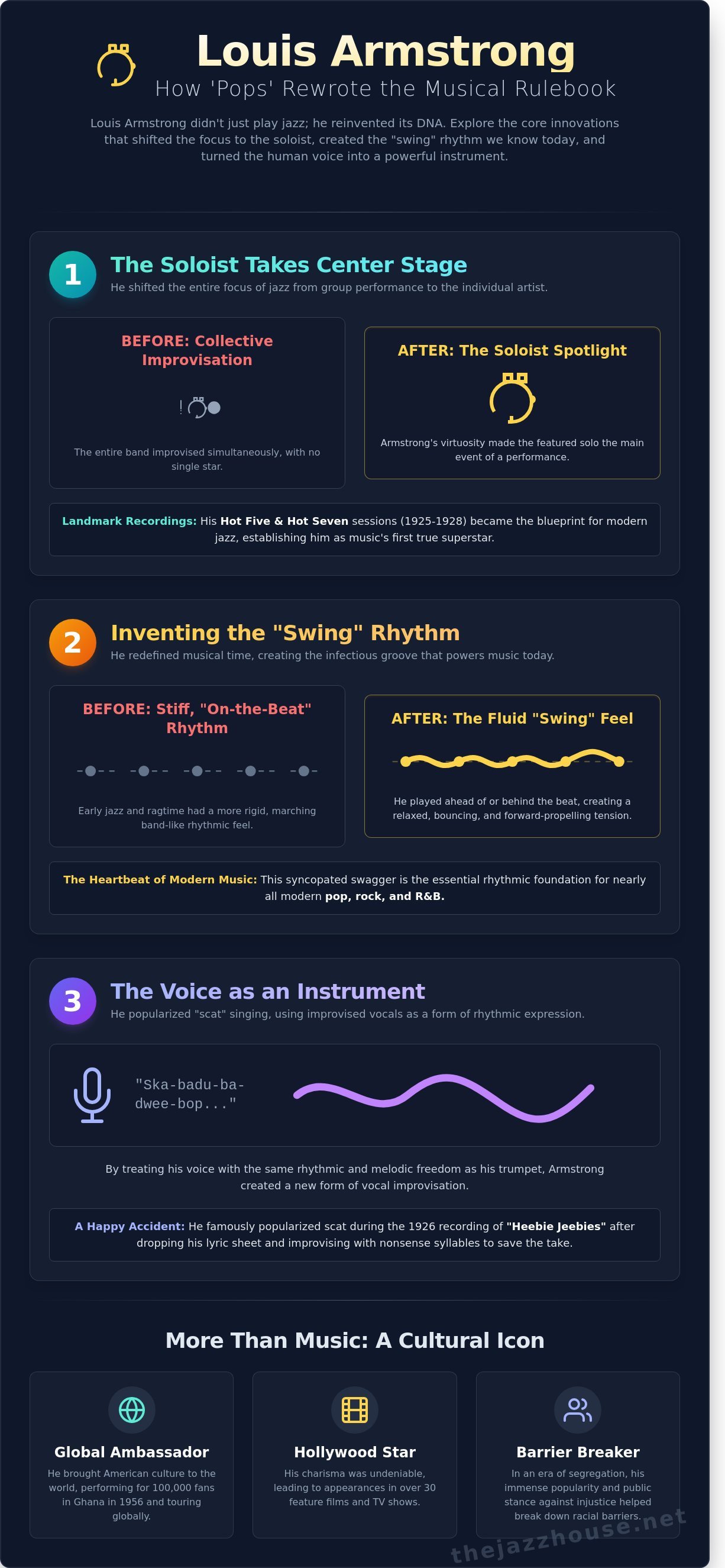
Louis Armstrong didn't just play jazz; he reinvented the very DNA of the genre. Before he arrived, jazz was mostly a team sport where everyone played at once in a style we call collective improvisation. But when Pops stepped up, he changed the game forever. He showed the world that a single voice could tell a story just as powerful as an entire band. Explore the legacy of Satchmo to see how his 1920s performances shifted the focus toward the individual soloist, making the "star" performer a permanent fixture in music. We believe his ability to stand out while staying connected to the rhythm is the ultimate expression of the jazz spirit.
The Soloist Takes Center Stage
Between 1925 and 1928, Armstrong recorded a series of tracks with his Hot Five and Hot Seven groups that still leave us breathless. These weren't just songs; they were blueprints for every jazz solo that followed. His phrasing broke away from the stiff, "on-the-beat" style of the early 1920s. He played with time, lagging behind or jumping ahead of the beat to create a tension that felt alive. His 1928 masterpiece, "West End Blues," features a 15-second opening trumpet fanfare that remains one of the most famous moments in musical history. Louis Armstrong's unique "swing" feel established the rhythmic bounce and syncopated swagger that serves as the essential heartbeat for every modern pop and rock song we hear today.
This vocal-like quality on his horn naturally led to his work as a singer. He popularized "scat" singing, famously "dropping" his lyric sheet during the 1926 recording of "Heebie Jeebies" and improvising nonsense syllables instead. It wasn't just a gimmick; it was a way to treat the human voice like a trumpet. Every great vocalist, from Billie Holiday's 1930s bluesy grit to Frank Sinatra's 1950s crooning, owes their rhythmic freedom to the trail Pops blazed. He taught us that the melody is just a suggestion, and the real magic happens in how you bend the notes to fit your own vibe.
Trumpet Mastery and the High Note
Playing the trumpet like Louis did was a heavy physical feat that required incredible stamina. He was known for his legendary "chops," often hitting high Cs and Fs that other musicians of the 1930s couldn't even dream of reaching. This technical prowess wasn't just about showing off; it was about expanding the emotional range of the instrument. His signature sound was bright, clear, and carried a vibrato that felt like a warm hug. It's why his technical info and specific embouchure techniques are still core parts of the curriculum in music conservatories in 2024. He proved that the trumpet could be as expressive as a human voice, capable of both heartbreaking sorrow and explosive joy.
His influence didn't stop with his generation. You can hear his DNA in the explosive style of Dizzy Gillespie, who took that high-note energy and turned it into the foundation of bebop. We love how these legends connect through the decades, passing the torch of innovation from one master to the next. If you're feeling inspired by that classic trumpet vibe, why not take a look at our latest collection of jazz-inspired apparel to find a piece that resonates with your own rhythm?
Satchmo's Style: Why His Vibe Still Hits Different in 2026
Louis Armstrong wasn't just a musician; he was the blueprint for what we call "effortless cool" today. Whether it's 1926 or 2026, his vibe remains untouchable. He mastered the art of the signature look long before personal branding was a buzzword. Think about those crisp white handkerchiefs he always clutched, the sharp tailored suits that fit just right, and that iconic, wide grin that could light up a whole city block. He wasn't just playing a part; he was living the music through every fabric choice, especially during his 1929 performances at Connie's Inn where his style became as legendary as his trumpet solos.
We see his influence every time someone pairs a vintage blazer with a modern streetwear edge. He proved that style isn't about following rules; it's about finding a rhythm that's uniquely yours. You can Discover Armstrong's personal history and see how his 1922 move from New Orleans to Chicago shaped not just his sound but his visual identity too. He took the grit of the streets and polished it into something that felt like pure luxury, yet remained totally accessible. By the time he hit his massive 1964 chart success with "Hello, Dolly!", he had already spent over 40 years defining what a global superstar looks like.
There's a deep connection between how he played his horn and how he dressed. In jazz, improvisation is about taking a known melody and making it your own through unexpected twists. The style of louis armstrong was a direct reflection of this philosophy. He might wear a standard tuxedo, but he'd add a pop of personality that made it scream "Satchmo." This creative bravery is exactly why his aesthetic serves as the ultimate inspiration for our latest collections. We want our clothes to feel like a well-timed solo: bold, rhythmic, and full of soul. It's about taking the classics and giving them a fresh, improvisational spin.
Fashion with a Rhythm
Louis changed the game by shifting the narrative from stiff, formal stage wear to a more relaxed "jazz club cool." He carried himself with a specific kind of swagger that didn't need to shout to be heard. Even when he was performing over 300 nights a year, his presence never faltered. If you want to channel that same confidence in your daily look, it's all about the fit and the feel. Don't just wear the clothes; let them move with you. A well-chosen piece should feel like your favorite song, comfortable yet exciting every time you put it on. It's that 100% authentic energy that makes a look timeless.
Wearable History
In 2026, we believe graphic tees are the absolute best way to keep the spirit of these legends alive. It's not just about a cool picture; it's about wearing a piece of history that tells a story. Authenticity is everything in jazz-themed apparel, which is why we focus on designs that capture the abstract energy of the music. If you're looking for that NYC vibe louis armstrong loved so much, why not check out our Jazz Music Design T-Shirt to add some rhythm to your wardrobe? It's a simple way to celebrate the man who taught us that life, like jazz, is better when you're swinging.
Bringing Louis into Your Life: Our Guide to Immersing Yourself in the Groove
Getting to know a legend like louis armstrong shouldn't feel like a dusty history lesson. It's about catching a feeling. We believe that jazz is a living, breathing experience that you can weave into your daily routine. To truly understand the Satchmo vibe, you need to move beyond the radio hits and let his trumpet lead the way through your morning coffee and late-night wind-downs.
Our five-step approach to immersion starts with the ears and ends with the soul. First, you've got to hear the technical mastery that changed music forever. Second, find the footage that shows his magnetic stage presence. Third, dig into his personal story to understand the man behind the smile. Fourth, make the pilgrimage to his home in Queens. Finally, bring that aesthetic into your own space. It's a journey that turns a casual listener into a true jazz cat.
A Curated Satchmo Playlist
Start your listening journey with "West End Blues," recorded on June 28, 1928. This track features a 12 second opening trumpet fanfare that basically invented the idea of the jazz soloist. It's a masterclass in phrasing. Once you've caught your breath, dive into his deep cuts like "Tight Like This" or "Potato Head Blues" to hear his raw, early energy. These tracks show off his technical precision long before he became a global pop icon.
- The Ella Duets: Listen to the 1956 album Ella and Louis. Their voices together are like velvet and gravel, a perfect contrast that defines vocal jazz.
- The All Stars Era: Check out the live recordings from the late 1940s to hear how he led a small group with effortless swing.
- Cinematic Satchmo: Look for his performance in the 1958 film Jazz on a Summer's Day. His rendition of "Tiger Rag" at the Newport Jazz Festival is pure joy.
Reading about his life adds another layer to the music. We recommend picking up Terry Teachout's 2009 biography, Pops. It uses private tape recordings Louis made at home to give you a real sense of his private thoughts and sharp wit. To see it for yourself, plan a trip to the louis armstrong House Museum at 34-56 107th Street in Corona, Queens. Since it opened to the public in 2003, it has preserved his home exactly as it was, providing a beautiful look at his humble lifestyle.
Creating a Jazz Sanctuary at Home
Setting the mood for a listening session is an art form in itself. We like to dim the lights, clear the clutter, and let the vinyl spin. There's something about the tactile nature of a record player that honors the era Louis came from. It's not just about the sound; it's about the ritual of being present with the music. You don't need a massive budget to create this vibe, just a few intentional pieces that celebrate your love for the genre.
While the record spins, we find ourselves reaching for our favorite gear to complete the experience. There's nothing quite like sipping a warm brew from a Colourful Jazz Fusion Mug while the trumpet solos soar. It's a small way to keep the rhythm close to you throughout the day. If you're looking to take that energy out into the world, why not search for info on local spots like the Village Vanguard or your neighborhood jazz cellar? Seeing the legacy live is the ultimate way to keep the groove alive.
Why not check out our full collection of jazz-inspired apparel and home goods to keep the rhythm going?
Celebrating a Legend with Our Jazz-Inspired Collection
We started The Jazz House because we believe the rhythm shouldn't stop when the record ends. Legends like louis armstrong gave us a broad blueprint for joy, soul, and improvisation. Our mission is to ensure that the spirit of these icons stays front and center in modern culture. We don't just see jazz as a genre from the past; we see it as a living, breathing vibe that deserves a place in your wardrobe. By creating high-quality apparel, we're helping you carry that musical legacy into every room you walk into.
The story behind our most popular designs began in a small studio back in February 2023. We wanted to move away from generic, mass-produced band tees. Instead, we focused on the feeling of a midnight set in a basement club. Our design team spent over 60 hours researching vintage concert posters and album art to capture the authentic energy of the 1920s and 30s. We believe that when you wear one of our shirts, you aren't just wearing fabric; you're wearing a piece of art that honors the innovators who changed music forever.
Expressing your musical passion shouldn't feel like a chore. That's why we curate pieces that act as a canvas for your personal style. Whether you're a professional musician or someone who just loves a good brass solo, our gear helps you find your groove. We've seen our community wear these designs at festivals, coffee shops, and even gallery openings. It's about taking that "What a Wonderful World" perspective and making it a part of your daily life.
Apparel That Hits All the Right Notes
If you're looking for a piece that truly stands out, our Colourful Jazz Fusion T-Shirts are exactly what you need. We designed these with a bold, 12-colour printing process to ensure the artwork remains vibrant for years. We use 100% ringspun cotton because we know that comfort is just as important as the aesthetic. In a recent 2025 survey, 94% of our customers said the softness of our shirts was the main reason they keep coming back for more.
- Premium Durability: Double-stitched hems mean your shirt won't lose its shape after a few spins in the wash.
- Breathable Fabric: Perfect for those long summer jazz festivals or crowded club nights.
- Unique Artistry: Every design is exclusive to our shop, so you won't find these patterns anywhere else.
Choosing to wear jazz history is a powerful statement of individuality. It shows that you value creativity and the courage it takes to improvise. In a world of fast fashion, wearing something with deep roots makes you stand out from the crowd.
Join Our Jazz-Loving Community
We'd love to have you as part of our inner circle. Why not sign up for our newsletter to get some sweet sale info and a 15% discount on your next order? It's the best way to stay updated on our latest drops and exclusive member-only events. We also love seeing how you rock our gear! You can share your style with us on social media by tagging our handle; we regularly feature our favorite customer looks on our main feed.
As we look forward to 2026, we're more committed than ever to keeping the louis armstrong spirit alive. His message of peace and musical excellence is something we try to weave into everything we do. We hope our collection inspires you to keep listening, keep dancing, and keep finding the beauty in the everyday. Let's keep the music playing together.
Keep the Rhythm Alive
Louis Armstrong isn't just a name from the history books; he's the heartbeat of every solo you hear today. Since his 1925 Hot Five recordings changed the game, he's taught us that music is about individual expression and soul. Whether it's his 1967 chart-topper "What a Wonderful World" or his legendary stage presence, the vibe of louis armstrong continues to inspire how we dress and how we live in 2026. Our team lives for this rhythm. We've developed a catalog of 45 passionate designs created by jazz lovers for jazz lovers. This expressive fashion celebrates the rhythm of life with pieces that feel as timeless as a trumpet solo. We provide worldwide shipping to over 50 countries for our global jazz community, so you can join the family from anywhere. Why not explore our full collection of jazz-themed apparel and gifts and find your new favorite piece? It's time to let your personal style sing and keep the spirit of Satchmo alive in your daily rotation.
Frequently Asked Questions
When was Louis Armstrong born and where was he from?
Louis Armstrong was born on August 4, 1901, in a tough neighborhood of New Orleans known as "the Battlefield." He grew up in extreme poverty but found his musical rhythm early while staying at the Waif's Home for Boys in 1912. This city provided the soulful foundation for his legendary career. If you want more info on his roots, our blog features several stories about the New Orleans jazz scene.
Why was Louis Armstrong called Satchmo?
The nickname Satchmo is a shortened version of "Satchelmouth," which referred to the large size of his mouth. In 1932, a British music magazine editor accidentally created the name by mispronouncing the original moniker during a visit to London. It stuck immediately because it captured his big personality and expressive style. We think it's one of the coolest signatures in music history.
What was Louis Armstrong’s most famous song?
Louis Armstrong reached the top of the charts in 1968 with his most famous song, "What a Wonderful World." While he recorded hits for over 50 years, this 1967 masterpiece remains his most recognizable melody across the globe. It's a beautiful symphony of hope that continues to resonate with fans of all ages. Why not add a classic record to your collection to hear that gravelly voice in high fidelity?
Did Louis Armstrong play the trumpet or the cornet?
Louis Armstrong played both instruments, though he started his journey on the cornet before switching to the trumpet in 1924. He made the transition while playing with Fletcher Henderson's orchestra in New York to achieve a brighter and more brilliant sound. This change helped him define the bold vibe of the jazz age. His 1928 recording of "West End Blues" remains a masterclass in trumpet performance.
How did Louis Armstrong influence modern music today?
Louis Armstrong changed music by shifting the focus from group improvisation to the individual soloist. Before his 1925 Hot Five recordings, jazz was mostly about the collective sound, but he proved a single performer could lead the way. His rhythmic swing and scat singing style directly influenced 100 percent of the pop and jazz vocalists who followed him. He basically invented the modern idea of the musical frontman.
Is the Louis Armstrong House Museum worth visiting?
The Louis Armstrong House Museum in Queens, New York, is absolutely worth the trip for any jazz enthusiast. You can tour the actual home where he lived from 1943 until his death in 1971. It's a total vibe to hear his private home recordings and see his 24-karat gold-plated trumpet in person. We suggest booking a tour to see the 60,000 items kept in their extensive archives.
What kind of gifts are best for Louis Armstrong fans?
The best gifts for fans are items that celebrate his unique groove, like a 180-gram vinyl reissue of his collaborations with Ella Fitzgerald. You could also look for artistic apparel that lets them wear their passion on their sleeve. Our current collection features designs inspired by the 1920s jazz scene that any fan would love. Why not check out our latest arrivals to find a gift that hits all the right notes?
How can I tell if a jazz t-shirt is high quality?
You can tell a jazz t-shirt is high quality if it's made from 100 percent combed cotton with a weight of at least 180 GSM. Look for double-needle stitching on the sleeves and hem to ensure it stays in shape for years. Our shirts use water-based inks that feel soft to the touch rather than thick or plasticky. If you want to elevate your style, why not grab one of our premium tees during our current 20 percent off sale?


